Chichén Itzá Walk logoChichén ItzáWalk
6,022 travellers have walked this guide

Chichén Itzá: A Complete Guide to the Pyramid, the Ball Court & the Sacred Cenote

What to see, when to come, what it costs — and a self-paced audio walk for the site itself.

See What's Inside Buy the Audio Guide Listen to Preview Buy Entry Tickets

Hear the guide before you go

A short sample — the same voice that walks you from the entrance to El Castillo and back.

What Is This Tour?

A self-guided audio tour you play on your phone as you walk. An offline GPS map shows where you are, and you start each story yourself when you reach the spot — so you keep your eyes on the pyramid, the carvings and the ball court, not on a screen. Buy once, use offline, keep it for a year.

GPS map
100% offline
8 languages
16 stops · ~1.5 hours
iOS & Android
Chichén Itzá self-guided audio tour on a phone in front of El Castillo
Used by 6,022 travellers · reviewed on Tripadvisor & Viator

Chichén Itzá Self-Guided Audio TourInstant access

From €9.99 · 1 year access
  • 100% offline — the signal at the site is poor, and it doesn't matter
  • Offline GPS map — you start each track yourself at the spot
  • 8 languages, real voice narration
  • Works on iOS & Android
  • 16 stops, about 1.5 hours — pause in the shade whenever you like

Why Visit Chichén Itzá?

Maya & ToltecAstronomyRitualNew 7 Wonders

Chichén Itzá is not one pyramid. It is a city: a ball court the length of a football pitch, an observatory with windows aimed at Venus, a well that swallowed gold and people, and a stepped pyramid built so precisely that twice a year the sun draws a snake down its side.

It sits in the flat scrub of the northern Yucatán, two and a half hours from Cancún and forty minutes from the colonial town of Valladolid. Around twenty thousand people lived here at its peak. Then it emptied — and when Spanish explorers pushed through in the 16th century they found temples wrapped in vines and no one to ask what any of it meant. Today it is a UNESCO World Heritage Site, one of the New Seven Wonders of the World, and one of the most visited archaeological sites on earth. It is also hot, sun-exposed and swamped by coach parties from about eleven in the morning, which is why timing matters here more than at almost any other monument.

This guide covers what the city is, what you are actually looking at, what a ticket costs in 2026, and how to plan the day. If you want the stories on the spot rather than in advance, our self-guided Chichén Itzá audio walk by TouringBee runs 16 stops in about an hour and a half, offline, in your own language — the whole route is on this page.

The Story of Chichén Itzá

A City the Spanish Found Already Empty

The Maya founded Chichén Itzá around the 5th century AD, and by the 9th and 10th centuries it was the most powerful place in the northern Yucatán. White paved roads — sacbeob — ran out from it to smaller towns; one of them, the widest known, connects the pyramid straight to the Sacred Cenote. No single king ruled the city. A council of clans did.

Then, from the 10th century, a northern people the sources call the Toltecs took over. They were just as sophisticated and considerably more violent, and they rebuilt the northern half of the city in their own style. Two hundred years later they faded too. The most convincing explanation is climate: around the 8th and 9th centuries the Yucatán went through the worst drought in millennia. Crops failed, springs dropped, soil thinned, and people walked away toward the coast. The Maya were not conquered here. They ran out of water.

El Castillo and the Serpent That Walks Down the Stairs

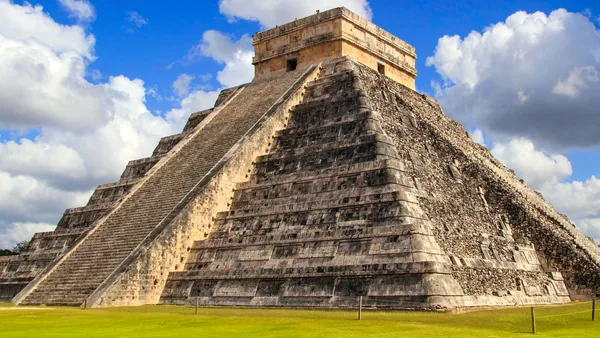
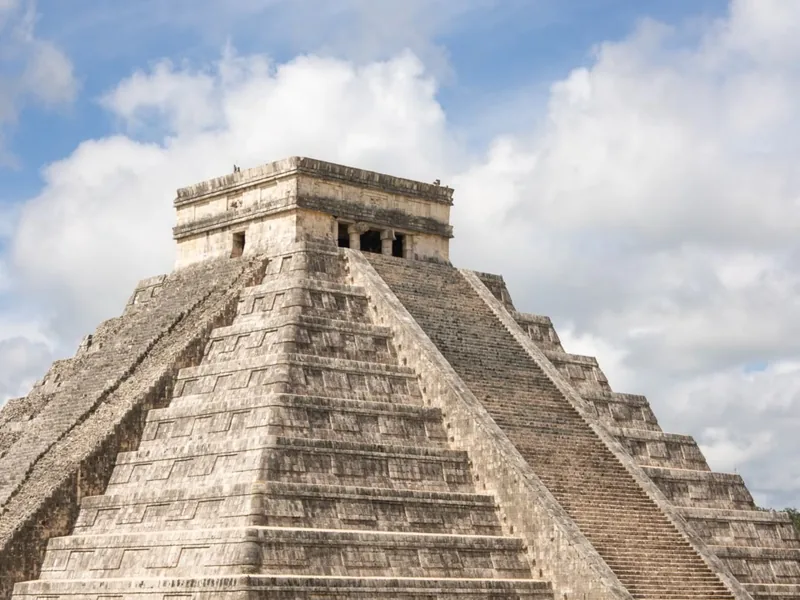
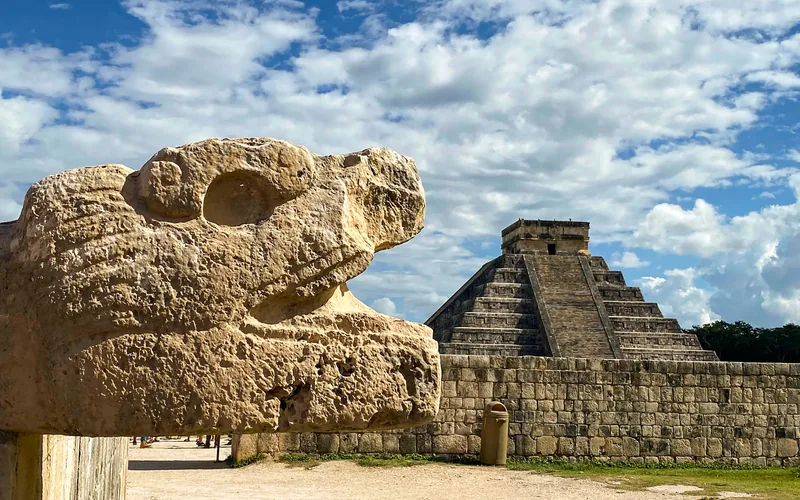
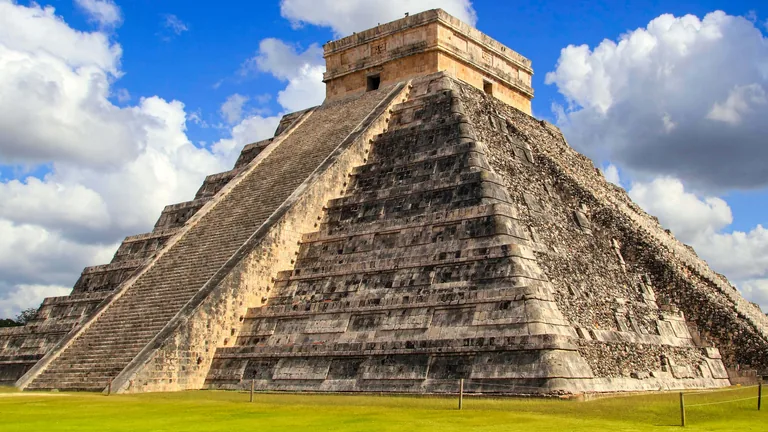
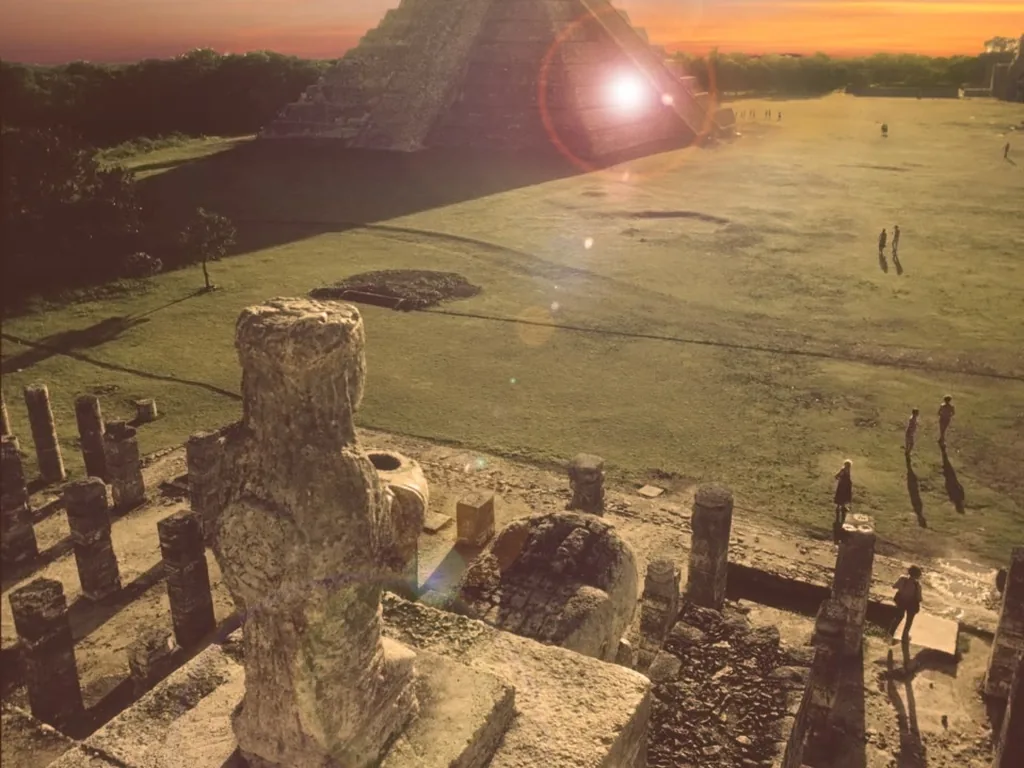
The pyramid at the centre — El Castillo, the Temple of Kukulkán — is 30 metres high, four staircases of 91 steps, and a calendar in stone. Kukulkán means "feathered serpent"; two enormous stone serpent heads sit at the foot of the northern staircase. Around the spring and autumn equinoxes, in the late afternoon, the stepped corner of the pyramid casts a row of triangles onto the balustrade, and the shadow appears to slither down to meet those heads. Tens of thousands of people come to watch it.

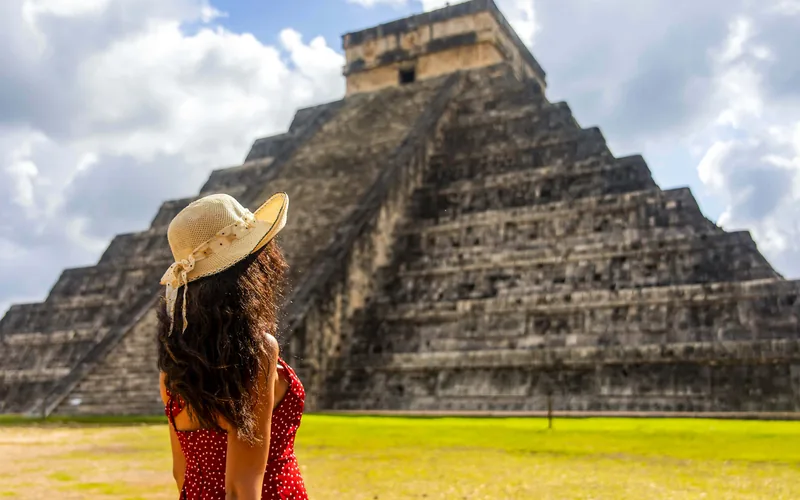
Two more things are worth knowing before you stand in front of it. First, the Toltecs built this pyramid over an older Maya temple, which was itself built over a freshwater sinkhole — a building on a building on a well. Second, you cannot go up. Climbing has been banned since 2006, after a visitor died in a fall, and it protects the stone as much as the visitors.

Hear the whole city, stop by stop, standing right where it happened. From €9.99 · offline · in English

Get the Audio Guide

The Ball Court, and the Ball That Weighed Five Kilos

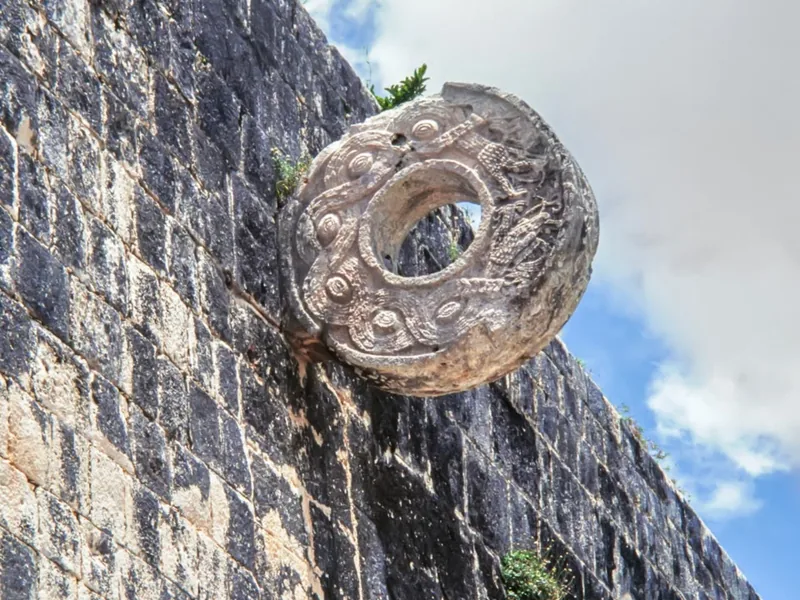
There are around a dozen ball courts at Chichén Itzá. The Great Ball Court is the largest in Mesoamerica — 168 metres of open ground between two high walls, with a carved stone ring set into each side. The exact rules are lost. What we know is that players moved a solid rubber ball with hips, shoulders and forearms, that the ball weighed between three and five kilograms, and that putting it through the ring ended the game on the spot.

Stand at one end and speak normally. The sound carries the length of the court and comes back at you. Clap once near the base of El Castillo, meanwhile, and you get a strange chirping echo off the steps that people compare to the call of the quetzal bird. Both effects are real, and both are more fun when you know to try them.

The Sacred Cenote: a Legend That Turned Out to Be True

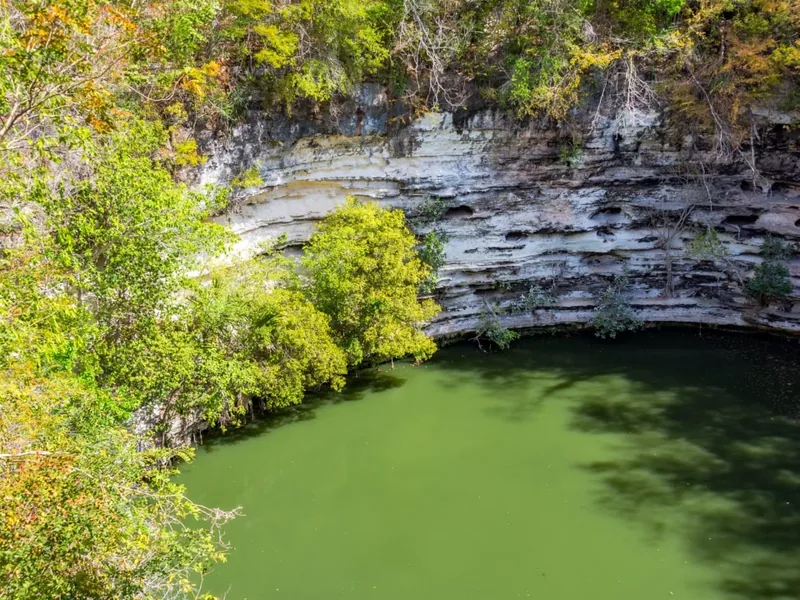
Three hundred metres north of the pyramid, a path through the trees ends at a hole in the limestone sixty metres across, with green water far below. The Yucatán has no rivers; rainwater drains through soft limestone into caves, and when a cave roof collapses you get a cenote. The Maya drank from some and gave offerings to others, because a cave was a door to Xibalba, the underworld.

Local oral tradition held that people and treasure had been thrown into this one. In the early 20th century an American consul named Edward Thompson decided to test the story, dredged the well and then dived it himself — and pulled out jade, gold, copper bells, obsidian knives and human remains. The legend was accurate. You cannot go down into the Sacred Cenote, but Ik Kil, three kilometres south, is open for swimming and is the standard second stop of the day.

An Observatory, a Skull Rack and 200 Columns

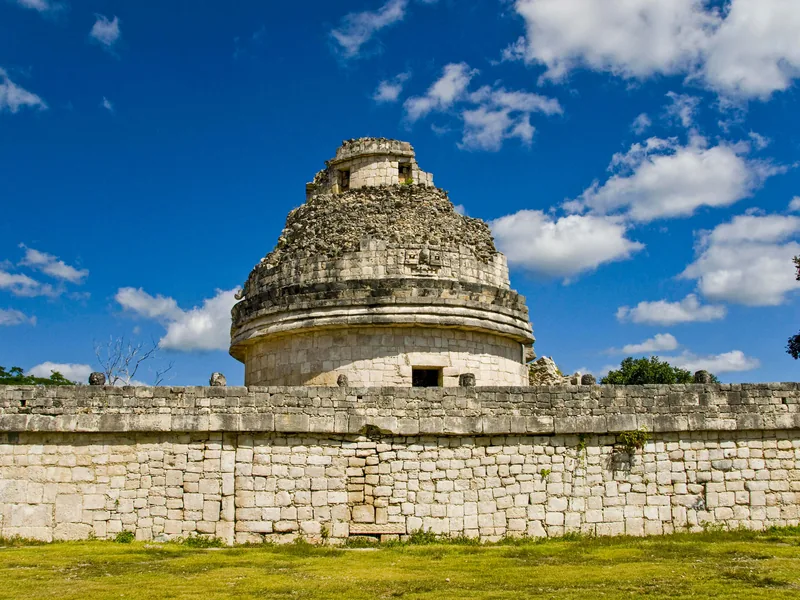
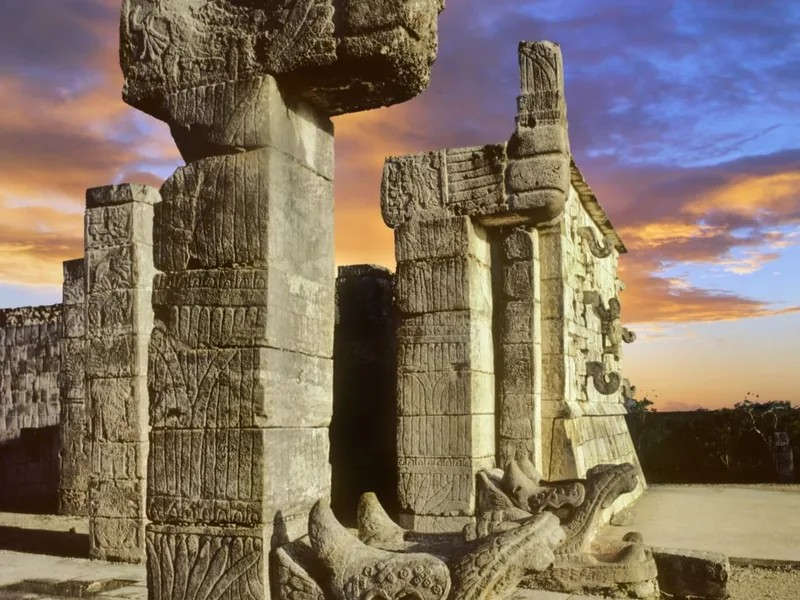
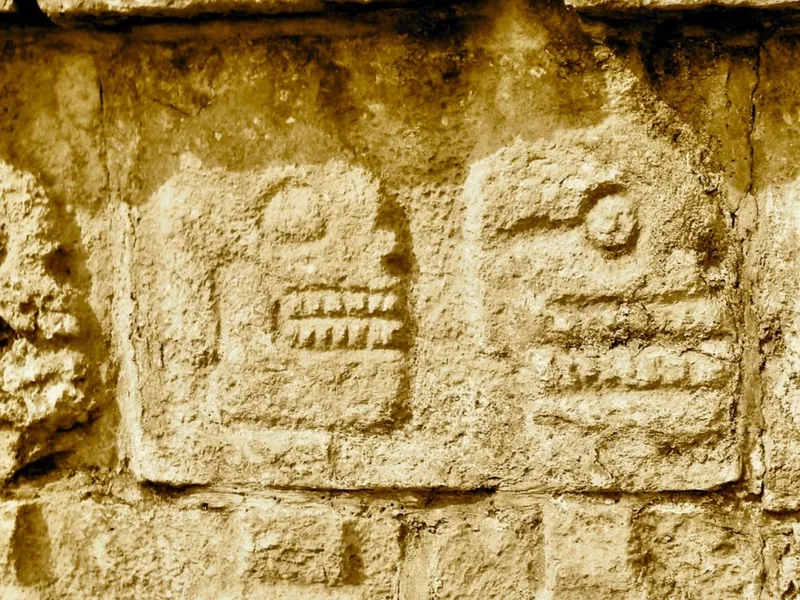
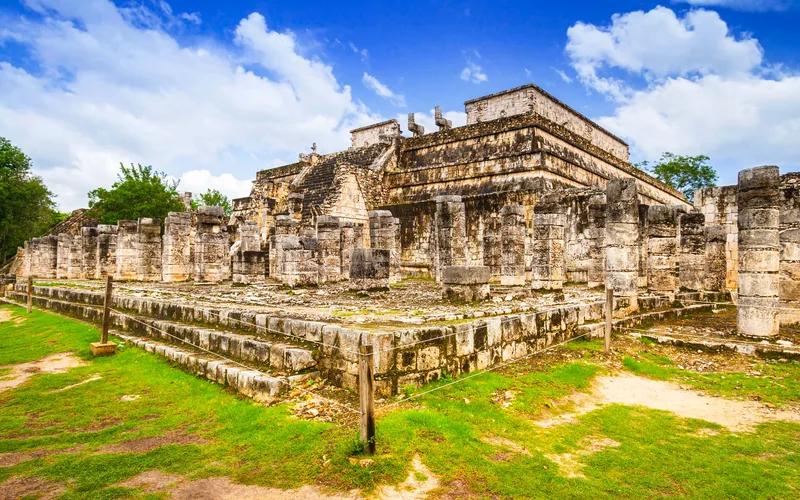
The rest of the city rewards a slow walk. El Caracol, the round observatory in the older southern zone, has windows placed to catch Venus and the equinox sunset — Maya astronomers tracked the year accurately enough to predict eclipses and time the maize planting. Tzompantli, the skull platform, is carved with hundreds of skulls and once displayed real ones on stakes. The Temple of the Warriors stands behind a forest of square columns — the Group of a Thousand Columns, which is really about two hundred — every one of them once plastered, carved and painted. Almost nothing you see today is grey by design. It was all red.

Further south, past the observatory, the buildings change character: older, finer, denser carving, the hook-nosed face of the rain god Chaak repeated across a façade dozens of times. The Spanish called this group the Nunnery because the stonework reminded them of a European convent. It was probably administrative. Archaeologists are still working beyond it, in the trees.

Planning Your Visit

Go at Eight, or Don't Bother

The gates open at 8:00. The first coaches from Cancún and the Riviera Maya arrive between 10:30 and 11:00, and by midday the site is both crowded and brutally hot — there is very little shade in the northern zone. Two hours starting at 8:00 and two hours starting at 11:00 are completely different visits. If you are driving yourself, note that crossing from Quintana Roo into Yucatán state puts your phone back an hour: you gain a morning.

How Long You Need

Two to three hours covers the archaeological zone properly. The audio walk is 16 stops and about 90 minutes of listening, which leaves room to stop, photograph and sit down. Add half a day if you are pairing it with a cenote and Valladolid, which is the classic and genuinely good combination.

What to Bring

Water — more than you think. A hat, sunscreen, and shoes you can walk on gravel and uneven stone in. Cash in pesos: the two ticket windows take cards, but card machines here fail often, and the toll booths on the 180D motorway take nothing but cash. Vendors line most of the paths inside the site; haggling is normal and expected.

Where to Stay

Valladolid, forty minutes east, is the smart base — colonial, cheap, and close enough to be at the gates for opening. Mérida is bigger and about 1h45 west. Staying on the coast means a 2.5-hour drive each way. Check hotels in Valladolid on Booking.com →

What You'll Discover on the Walk

A handful of the places and stories waiting inside the fence — the full route unfolds in the guide as you walk.

El Castillo, the pyramid of Kukulkán at Chichén Itzá

El Castillo

A calendar built as a pyramid — 91 steps a side, and a serpent of shadow twice a year.

Stone scoring ring on the wall of the Great Ball Court at Chichén Itzá

The Great Ball Court

The largest in Mesoamerica, with a stone ring seven metres up and acoustics that still work.

The Temple of the Warriors and its columns at Chichén Itzá

Temple of the Warriors

A chacmool at the top, eagles and jaguars on the steps, and 200 carved columns below.

The Sacred Cenote at Chichén Itzá

The Sacred Cenote

A green well sixty metres wide that gave up jade, gold — and the people thrown in with it.

El Caracol, the observatory at Chichén Itzá

El Caracol

The observatory. Its windows are aimed at Venus, and its astronomers predicted eclipses.

Carved skulls on the Tzompantli platform at Chichén Itzá

Tzompantli

The skull platform — hundreds carved in stone, and once rows of real ones on stakes.

How the Audio Tour Works

Buy the guide

One payment, instant access. No subscription.

Download before you go

Get the TouringBee app on iOS or Android and download the tour at your hotel — the signal at the site is weak.

Start at the entrance

Open the guide when you walk in, follow the offline map, and start each story yourself at each stop.

Pause & resume

Stop in the shade, drink some water, pick it up exactly where you left off.

Get the Audio Guide

Visiting Chichén Itzá

Entry (2026)~697 MXN for foreign adults — INAH 105 + Yucatán state 592, paid at two windows
Hours8:00–17:00 · ticket booths and last entry 16:00
AddressYucatán 97751, Mexico (municipality of Tinúm)
ClimbingNot allowed on any structure since 2006
Getting there~2h30 from Cancún on the 180D toll road (cash pesos), 40 min from Valladolid, ~1h45 from Mérida
MapOpen in Google Maps →

Chichén Itzá — Entry Tickets & Tours

Book ahead · skip the two ticket queues · mobile ticket

From ~€35 · adult entry · instant confirmation

  • Both government fees handled in one booking — no second window, no cash surprise
  • Mobile ticket — show it on your phone, no printing
  • Free cancellation up to 24 hours on most options
Check availability & book on Tiqets →

Booked through our partner Tiqets. You pay the same price; we may earn a small commission.

Prices at the gate are set yearly by INAH and the state of Yucatán — always check the current figure before you travel.

Book Tickets, Day Trips & Cars

Prefer a coach from the coast, an early-access tour, or your own car for the day? Compare our trusted partners — the same prices you'd pay direct.

Some links below are affiliate links (Tiqets, GetYourGuide, Booking.com). If you book through them we may earn a small commission — at no extra cost to you. It never affects what we recommend.

Ruins at Chichén Itzá
Tiqets

Entry Tickets

Both fees in one booking · mobile ticket
Book on Tiqets →
A visitor in front of the pyramid of Kukulkán
GetYourGuide

Day Trips & Early Access

From Cancún, Playa del Carmen, Tulum & Mérida · cenote combos
Book on GetYourGuide →
Serpent head sculpture beside the pyramid at Chichén Itzá
Booking.com

Car Hire & Hotels

Drive yourself and beat the coaches · beds in Valladolid & Mérida
Compare cars →

What Travellers Say

Verified reviews of the audio guide from travellers on Tripadvisor and Viator.

"This audioguide was way better than I expected! The stories are well told and super interesting. I liked that I could take breaks, sit in the shade, then keep going. Chichen Itza is amazing, and this made it even more special."
Albert Parson · Tripadvisor
"Great audio tour! Easy to use and full of cool info. Loved doing it at my own pace. There was no rush, no crowds to keep up with, just me exploring and learning on my own terms."
Harry Harrison · Tripadvisor
"A great way for me to visit Chichen Itza without having to join a big tour group or hire a private guide. It provided a nice route to walk that built up to the most impressive ruins really nicely. For the price point I'd definitely use one of these again."
kcan · Melbourne, Australia · Tripadvisor
"Very nice experience. The site is impressive and with the audio guide we understand much better what we see. Stories about sacrifice, the playground… fascinating! I recommend."
Verified traveller · Tripadvisor
"Very nice and easy to use on your own tempo! Just install everything before, because the network over there is bad… just follow the numbers."
demaerestefanie · Belgium · Tripadvisor
"The app is really practical, the audio has good quality and I learned a lot. The best: no loud groups or schedules. I recommend it."
Jorden A. · Tripadvisor

More Audio Tours in Mexico

Doing more than Chichén Itzá? The same offline guide works at the other great Maya and Aztec sites.

Tulum Ruins

17 stops · ~1 hour · offline · 1h50 from here
View tour →

Teotihuacán Pyramids

20 stops · ~2 hours · offline · near Mexico City
View tour →

Mexico City

26 stops · ~2 hours · offline · historic centre
View tour →

All TouringBee tours

Cities & landmarks worldwide
Browse the shop →

Plan Your Visit

Frequently Asked Questions

How much does it cost to enter Chichén Itzá?

Foreign visitors pay two separate fees at two windows: the federal INAH fee and the Yucatán state fee — around 697 pesos in total in 2026 (roughly €35 / $40). Prices are set yearly, so check before you travel.

What are the opening hours?

The site opens at 8:00 and closes at 17:00. Ticket booths stop selling and last entry is at 16:00. Arriving at opening is the single best decision you can make here.

Can you climb the pyramid at Chichén Itzá?

No. Climbing El Castillo and the other structures has been banned since 2006, after a visitor died in a fall. You walk around the monuments, not up them.

How long do you need at Chichén Itzá?

Two to three hours covers the main archaeological zone at a comfortable pace. The self-guided audio walk runs about 1.5 hours across 16 stops, leaving time for photos and shade.

When is the equinox serpent?

Around 20 March and 22 September. In the late afternoon the stepped corner of El Castillo throws a zigzag shadow onto the balustrade that looks like a serpent descending the stairs. The effect is visible for several days either side — and so are the crowds.

Is Chichén Itzá Maya or Aztec?

Maya. The Aztecs lived in central Mexico and rose centuries later. Chichén Itzá was founded by the Maya; from the 10th century the Toltecs took the city, which is why the northern monuments look different from the older southern ones.

Is the audio tour available offline?

Yes. Download it once in the TouringBee app before you go — mobile signal at the site is poor — and it works fully offline, with no data needed.

What languages is the audio guide in?

Eight: English, Spanish, French, German, Italian, Portuguese, Polish and Russian.

Is Chichén Itzá worth visiting?

Yes, if you go early and know what you are looking at. Arriving at 8:00 with a guide in your ears turns a hot walk past roped-off stones into one of the best mornings in Mexico.

About the Author

Eugene, author of the Chichén Itzá Walk guide

This guide is written by Eugene, a former tour guide and the founder of the travel-content network paris10.travel. He is the author of TouringBee's self-guided audio tours, including the Chichén Itzá walk that 6,022 travellers have now used on site. Prices, hours and rules here are checked against the current official sources, not copied from other pages.

The aim is simple: to leave you more confident, more curious, and better prepared than you were five minutes ago — and, if you want the full story on the spot, to walk it with you through the app.

Walk the City With Every Story in Your Ears

The pyramid, the ball court, the well and the observatory — explained where you're standing, at your own pace.

Get the Audio Tour — from €9.99
Chichén Itzá Audio Guide · from €9.99 · offline · in English
Buy €9.99